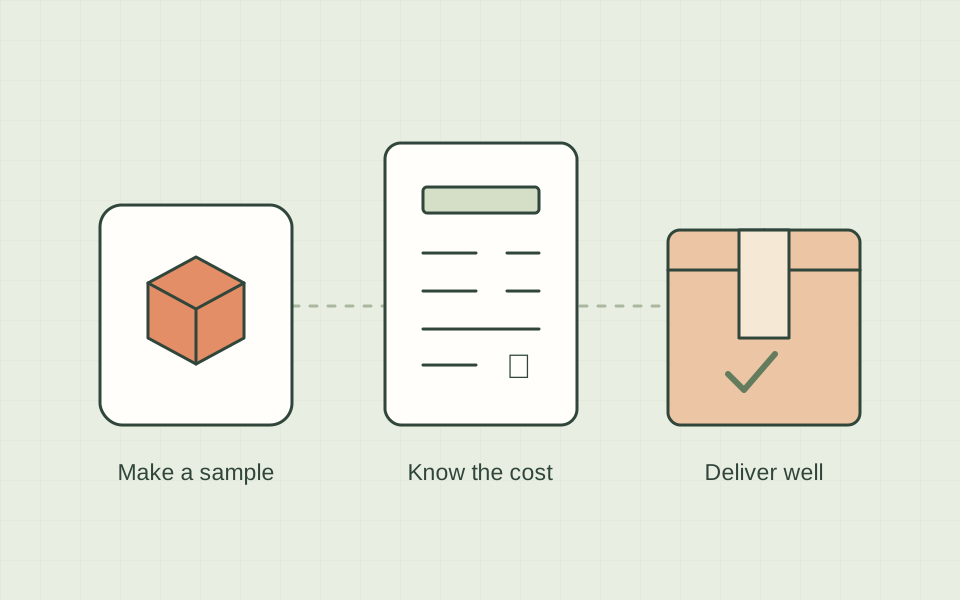
Start a small 3D printing business by solving one specific customer problem and producing one useful sample. The printer is part of the process; customers pay for a finished result that meets their needs. This guide focuses on planning and order delivery in an Indian small-business context. It does not promise earnings or prescribe legal or tax arrangements.
Choose a narrow first offer
Pick a customer group you can speak with directly and a product you can explain clearly. For example, you might explore personalised desk labels for local offices. This is an idea to validate, not a claim that local offices will buy. Ask how they currently solve the problem, what dimensions and finish matter, and what would make a new option useful.
Make a sample before a catalogue
Create one representative design and produce a prototype, either on your own machine or through a print service. Photograph the real sample and describe its actual material, size and finish. Let a potential buyer examine it. Ask what needs changing and whether the result is worth paying for. An encouraging comment is useful feedback, but it is not the same evidence as an order.
Know the full cost
Track material, preparation time, printing, finishing, packaging and the time spent discussing changes. Include a sensible allowance for failed attempts and maintenance based on your own records as they develop. Use the pricing worksheet to separate the cost of doing the work from the selling price. A busy printer can still be producing unprofitable orders.
Keep the first order process clear
- Collect the name or artwork, dimensions, quantity, intended use and delivery location.
- Confirm which design version and material the customer is approving.
- Describe the visible finish and any limitations using a real sample.
- Give a written quote with the work included, delivery arrangement and change policy.
- Check one approved sample before producing the full quantity.
- Inspect and count the finished items before packing.
Build a small operating routine
Use an order sheet with a reference number, customer approval, promised date and current status. Store the approved file with that order number. Plan time for preparation, inspection and reprints instead of scheduling the printer continuously at its theoretical maximum. Keep a record of what failed and how much the failure cost; this improves future quotes and delivery estimates.
For Indian customers, confirm the address and actual delivery cost before quoting shipping. Check local availability of replacement parts and material if you depend on your own machine. Set up the workspace according to the printer and material instructions. Obtain current advice on the registrations, invoices, taxes and permissions that apply to your situation from the relevant authorities or a qualified professional.
Review evidence before expanding
| Track | What it helps you decide |
|---|---|
| Paid orders by product | Which customer problem has real demand. |
| Actual cost and time per order | Whether your price covers the work. |
| Reprints and late deliveries | Where the process needs improvement. |
| Repeat enquiries and purchases | Whether customers want the offer again. |
Review a small batch of completed orders before adding equipment or a long product list. If demand is irregular, outsourcing may keep the commitment manageable. If orders repeat, measure which step is slowing you down: design, machine time, finishing or customer communication. Buy equipment to solve a demonstrated need, and keep the first offer reliable while learning.
Sources & further reading
We use AI to help prepare our guides. Check the sources and follow the instructions for your specific printer and materials.