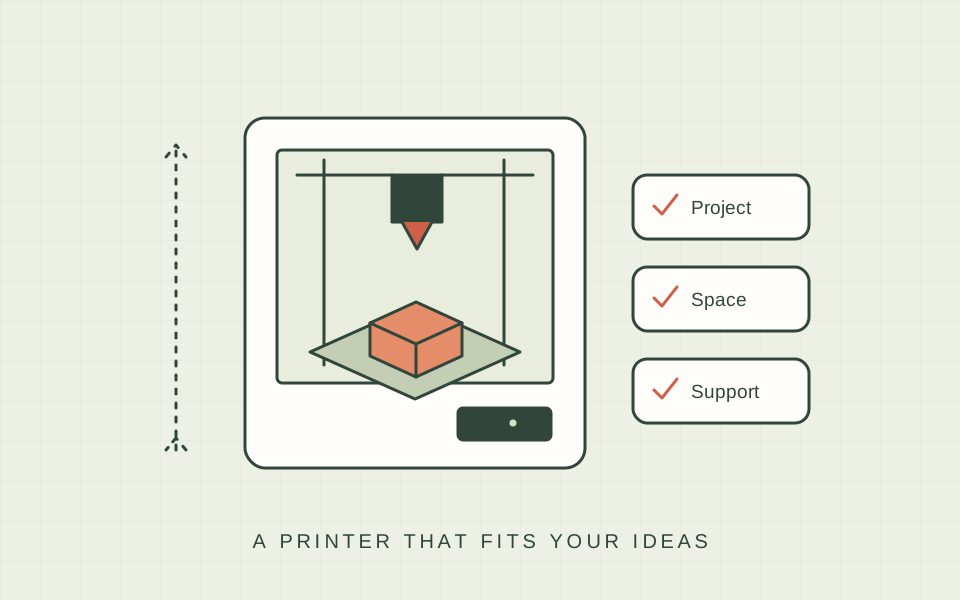
Choose your first printer around the objects you want to make, the space available and the support you can get. Start with a written shortlist of needs. A low purchase price or an impressive speed number is only one part of the decision. This guide gives you a buying framework; it does not rank current models or quote live Indian prices.
Describe three projects first
Write down three likely projects and their approximate dimensions. A personalised keychain, a desk organiser and a miniature character have different priorities. Decide which project matters most. This keeps a rare “maybe one day” project from driving the whole purchase. If you cannot yet picture a first project, produce a sample through a service before spending on equipment.
Match the workflow to the job
Check whether filament or resin printing suits your main use. Compare preparation, material handling, post-processing and workspace requirements as well as visible detail. Within filament printing, verify which materials a machine officially supports. Material guides list different hardware and build-surface requirements; a machine that handles a beginner material is not automatically suitable for every filament.
Measure the working space
Measure the whole operating footprint, including spool holders, moving beds, open doors and access for maintenance. Decide where tools and material will be stored. Read the manufacturer’s workspace and ventilation guidance. Keep the printer somewhere you can use it as instructed; an enclosure alone does not answer every question about placement or ventilation.
Compare the total cost in India
- Request a dated delivered quote for the exact model and included accessories.
- Confirm who handles warranty questions and where repairs are performed.
- Ask which spare parts are stocked locally and how replacements are ordered.
- Budget for starter material, the necessary workspace and routine consumables.
- Record any recurring software, cloud or accessory costs relevant to your workflow.
Do not compare one seller’s bare machine price with another seller’s complete bundle. Put both offers into the same list of inclusions. If importing, obtain the full payable estimate and delivery terms from the seller or carrier rather than assuming the overseas sticker price is the final cost. This is a purchasing checklist, not a calculation of tax or import duties.
Ask for evidence that matches your project
A useful demonstration uses a model similar to yours and explains the material, settings and finishing. Ask to see the entire sample, including its underside, rather than only a polished photograph. Note whether performance claims are manufacturer specifications or measured results from a named test. We have not performed comparative printer tests for this guide.
| Question | Why it matters |
|---|---|
| Will my model fit with its supports? | The usable print arrangement matters more than one dimension. |
| Can I obtain profiles and instructions? | Clear setup guidance reduces guessing. |
| What happens when a part wears out? | Downtime and repair access affect the real cost. |
| Can I see a representative sample? | You can judge the finish your own project needs. |
Make the final decision
Shortlist two or three exact models and date your comparison. Mark each requirement as met, unmet or still unknown. Resolve important unknowns with the seller before paying. Keep money aside for practice prints and learning time. Once you have a machine, follow its own setup manual and use the first-print workflow to understand what comes next.
Sources & further reading
We use AI to help prepare our guides. Check the sources and follow the instructions for your specific printer and materials.